Sandra L. López Varela 2021 Etnoarqueología para el combate a la pobreza, la estrategia ignorada por el estado Mexicano. In: XIX.México en el Mundo– El Mundo en México: Dinámicas de Encuentros y Enfoques Estéticos, edited by Yasmin Temelli. iMex Revista
Alexander von Humboldt (1988 [1811]) describes in his Essai Politique sur le Royaume de la Nouvelle Espagne, the landscape of social inequality that existed in New Spain in terms of the distribution of wealth, civilization and soil cultivation during the reign of Charles IV. For more than two centuries, the Mexican government has tried unsuccessfully to revert social end economic inequality through economic growth and development policies. In the following pages, I discuss the tensions caused by the implementation of these strategies at Cuentepec in the State of Morelos. Supported by the use of analytical techniques and ethnographic techniques, the Cuentepec ethnoarchaeological project introduces the theoretical and methodological weaknesses of economic strategies to combat poverty. Findings for its weaknesses reveal that in the absence of an anthropological and archaeological background, indistinct of the capitalist or socialist oriented government that has ruled Mexico, society has never been considered as the cause and consequence of economic growth and development.
Download
Sandra L. López Varela 2020 Approaching Pixar’s film ‘Coco’ during the Trump Era. In US-Mexican Encounters in Contemporary North American Cinema, edited by Guido Rings, iMex Revista
An archaeology of media approach guides this analysis of the film Coco, a 3D animated fiction movie inspired by the Day of the Dead or Dia de los muertos in Mexico, and released by Pixar Animation Studios, a subsidiary of Walt Disney Studios, in 2017. In particular, I explore the tensions and contradictions within Pixar's most successful movie at the box office in taking a stand against Donald Trump's presentation of Mexicans as "rapists and drug-trafficking criminals". I argue that this film, despite its praise by audiences and critics as a 'pro-Mexico' film, does ultimately not vindicate Mexico's "good people". Instead, it promotes an institutionalized nationalist image of Mexico's heritage and identity, which goes back to the nineteenth century. Considering that Disney has the largest global market share in the film industry, Coco's director Lee Unkrich's good intentions to make this film 'right' help to disseminate and support the Mexican government in its reconstruction of an imagined sociocultural homogeneity, which marginalizes non-dominant ways of life in a culturally rich and diverse country.
Download
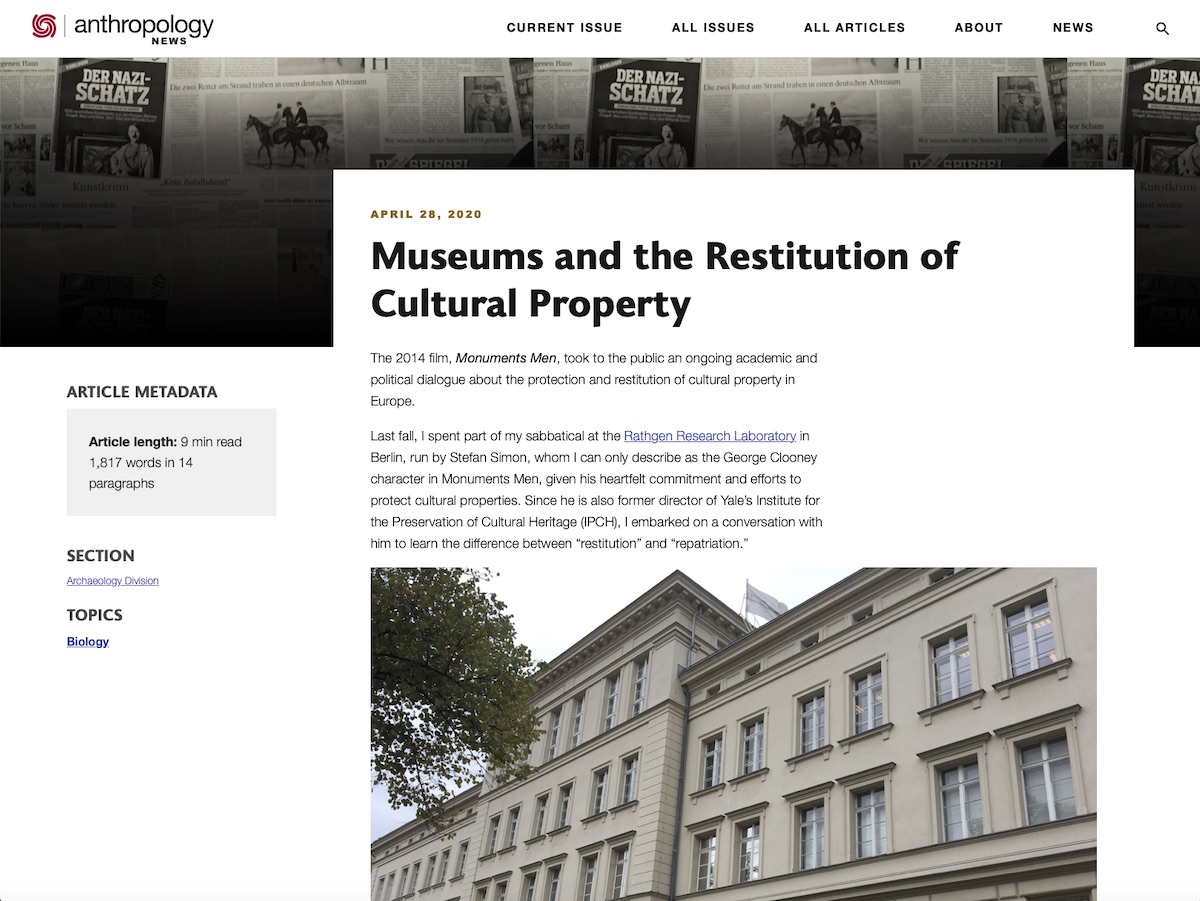
López Varela, Sandra L. 2020 Museums and the Restitution of Cultural Property. Anthropology News, American Anthropological Association
Museums continue to keep their interest in owning objects or preparing blockbuster exhibitions, but what about the knowledge these provide? Museums are highly trusted institutions. If they are not telling the public where objects come from, museums are not only betraying the public, they put themselves at risk of losing their main asset: public trust. Museums have to move beyond a dialogue of ownership and instead engage in significant partnerships with these nations.
Download
López Varela, Sandra L. 2019 Alternative Mexico: A Mobile Application Empowering Heritage 2.0. In Proceedings of the 23rd International Conference on Cultural Heritage and New Technologies, edited by Wolfgang Börner and Susanne Uhlirz, 1-12. Vienna: Museen der Stadt Wien – Stadtarchäologie
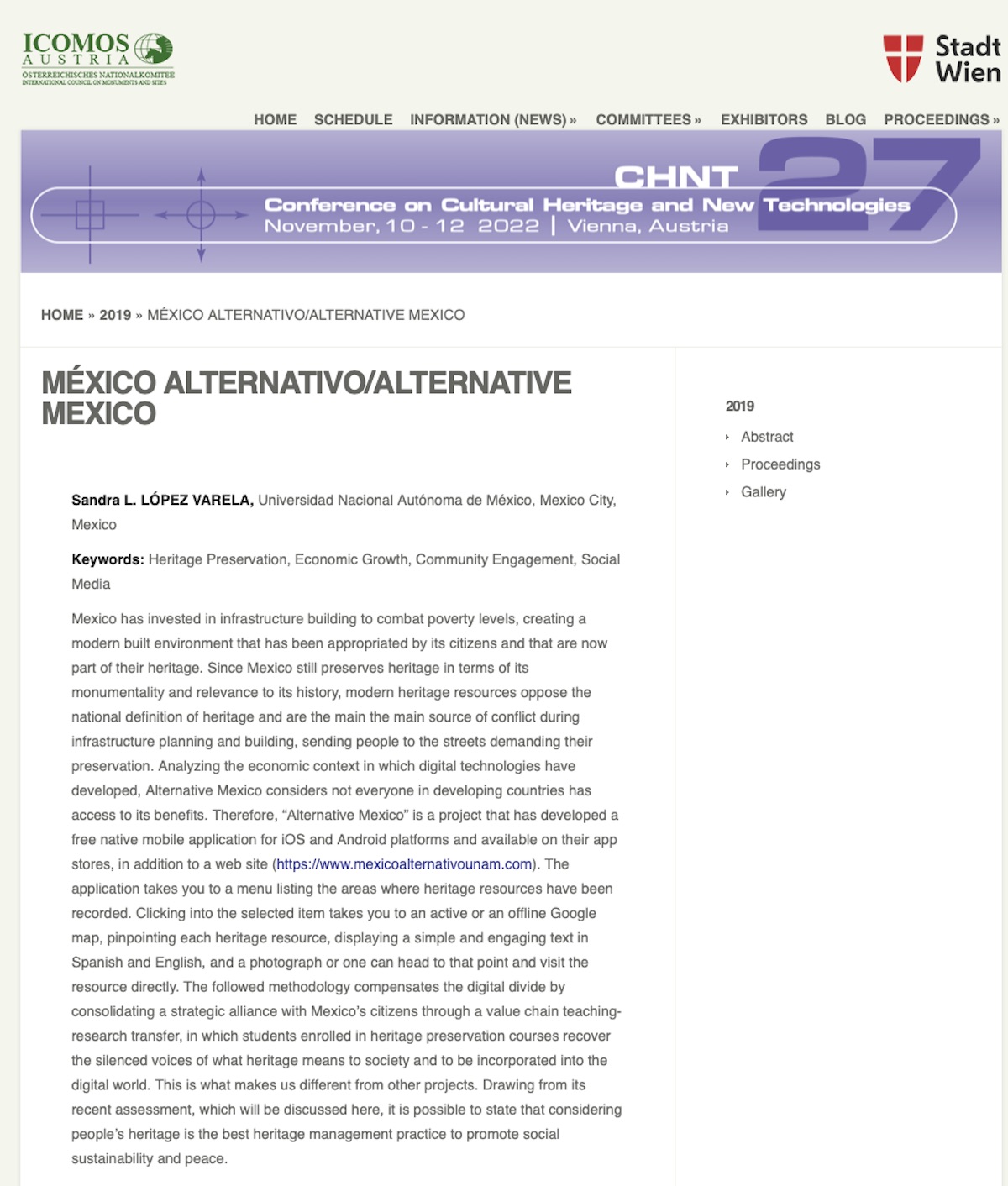
For more than a century, infrastructure building and promotion of modern lifeways to strengthen Mexico’s economy have created a built environment that has been appropriated by its citizens. The urban environment holds memories and experiences that are now part of “their own history”, “of their heritage”. Unfortunately, their heritage contests the national definition of cultural patrimony, still preserved by Mexico’s stewards in terms of monumentality and relevance to the history of the nation. Since Mexico’s heritage management looks exclusively to the past, it denies the possibility to protect alternative views of what heritage means to society. Therefore, the aim of this project is to facilitate a technological platform to the “(dis)empowered citizen” to communicate the value of their heritage, through a mobile application, Alternative Mexico, for iOS and Android devices is available for free in the iTunes and Google stores.
Download
Leticia Flores Farfán y Sandra López Varela 2020 El pasado remasterizado: la posproducción del patrimonio cultural de México. Estudios del Discurso, UAEM
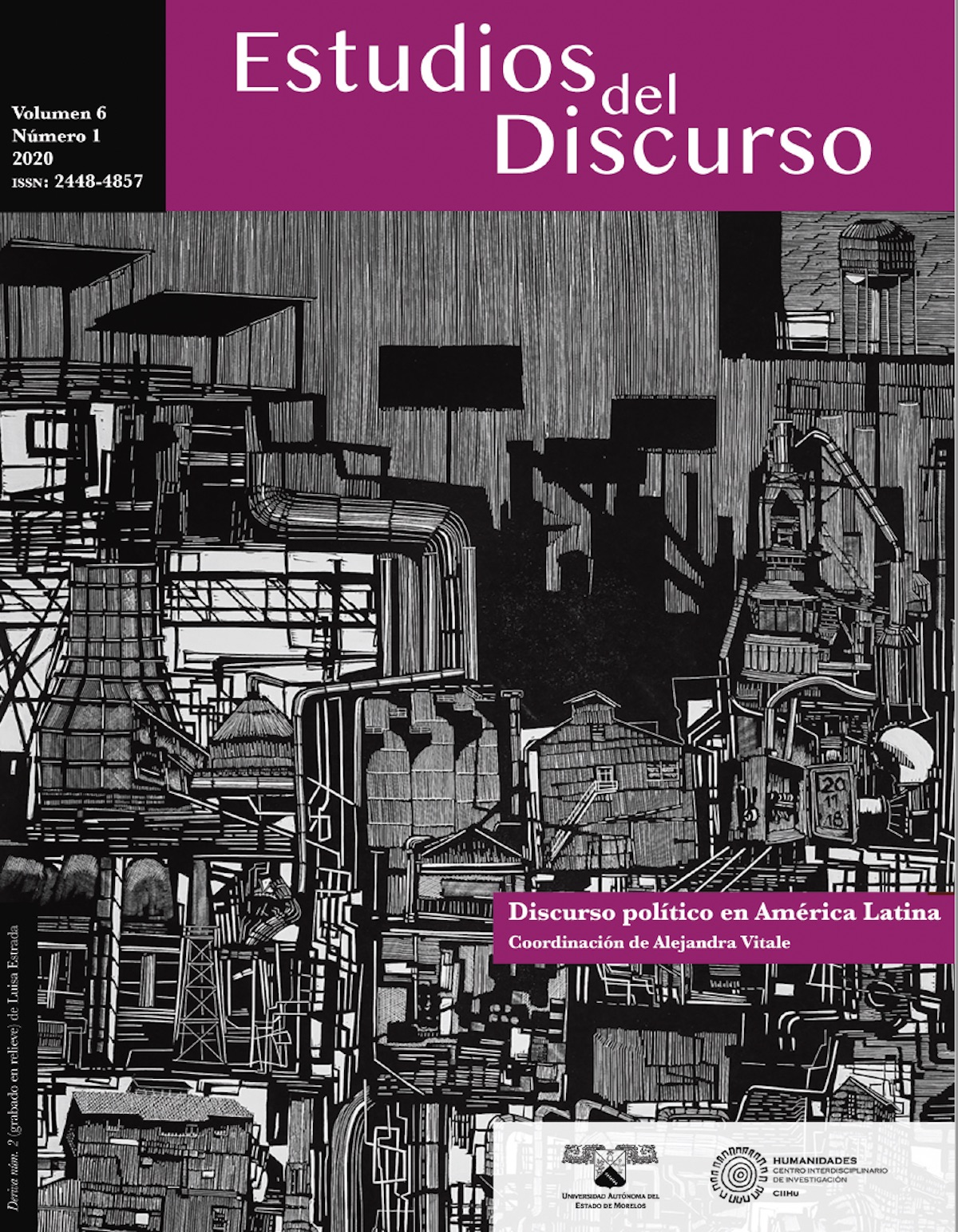
On the wake of the fiftieth anniversary of the student’s massacre that took place on October 2, 1968, at the Nonoalco Tlatelolco Housing Complex, José Ramón Amieva, Mexico City’s major, signed a mandate whereby “Tlatelolco” became part of the intangible cultural heritage to honor its historical richness, dating back to its foundation by the Aztecs in 1337. In his speech, Amieva emphasized no student would be allowed to be the victim of such an act of aggression, much less his or her whereabouts be unknown. By inserting the massacre of 1968 within the declaration of intangible cultural heritage, the government created a “new” national truth regarding the massacre, with the potential to blur the character of the 1968 movement; not without inciting a countercultural movement introducing an alternative view of Mexico’s heritage, which visibly brings to life a claim for social justice.
Download
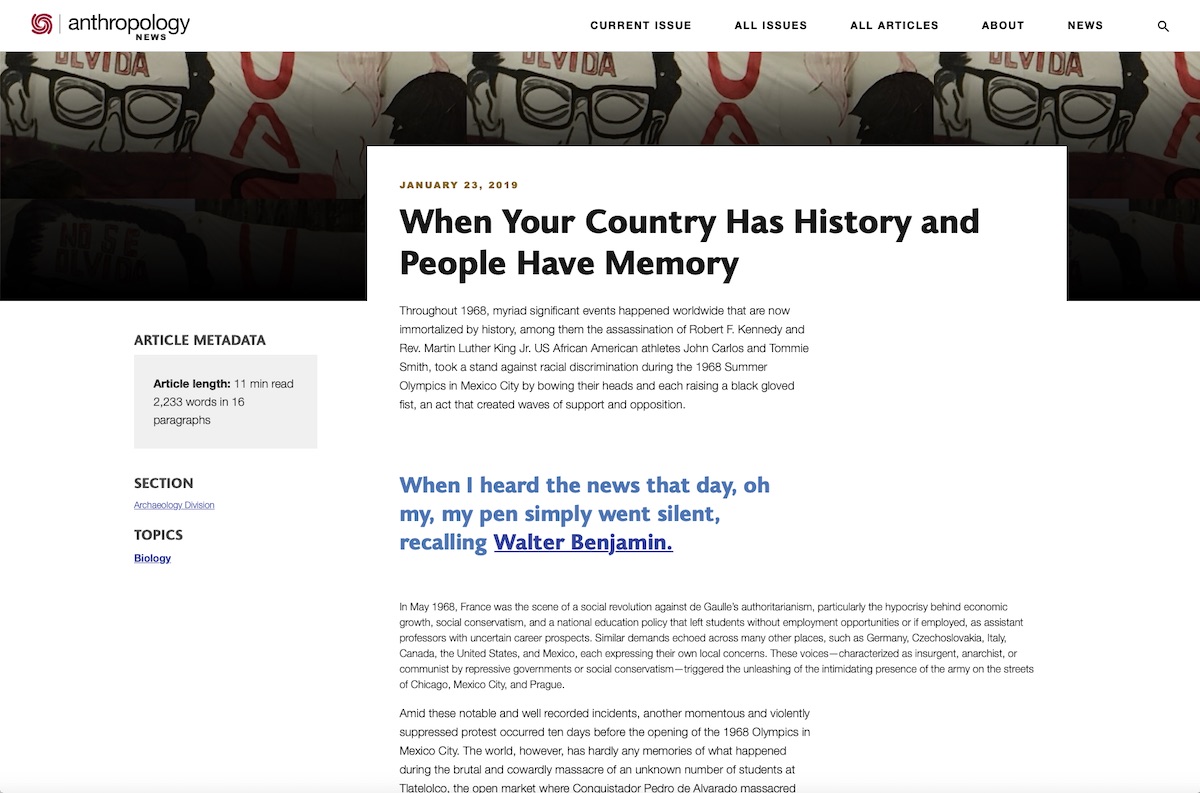
Sandra L. López Varela 2019 When Your Country Has History and People Have Memory. Anthropology News, American Anthropological Association
On October 2, 2018, ninety thousand people headed to Mexico City’s downtown plaza carrying their memories of the student’s massacre that took place in 1968. Earlier that day, Mexico City’s mayor signed an initiative to declare the massacre as part of the city’s heritage. With the presence of President-elect López Obrador at Tlatelolco that evening, the 1968 student movement was officially inked in Mexico’s history books as intangible cultural patrimony.
Download
López Varela Sandra L. 2020 Mexico’s Heritage and Management. En: Encyclopedia of Global Archaeology, editado por Claire.Smith, Springer
Mexico’s heritage is here defined to approach the advantages and disadvantages of having a national preservation model. The pages that follow, critically, examine how the need to modernize the nation has historically and politically defined Mexico’s concept of heritage. Mexico’s desire for economic growth is pressuring the National Institute of Anthropology and History (Instituto Nacional de Antropología e Historia [INAH]), the stewards of Mexico’s heritage, to adopt a private sector-based model. In the absence of a regulated process, the participation of the private industry has become a liability, not a preservation asset that could create a fertile employment field in heritage management, with a positive impact on Mexico’s GDP (gross domestic product).
Download
López Varela, Sandra L. 2019 Archaeology and Nation Building in Mexico. In Global Social Archaeologies: Making a Difference in a World of Strangers, edited by Koji Mizoguchi and Claire E. Smith, Routledge
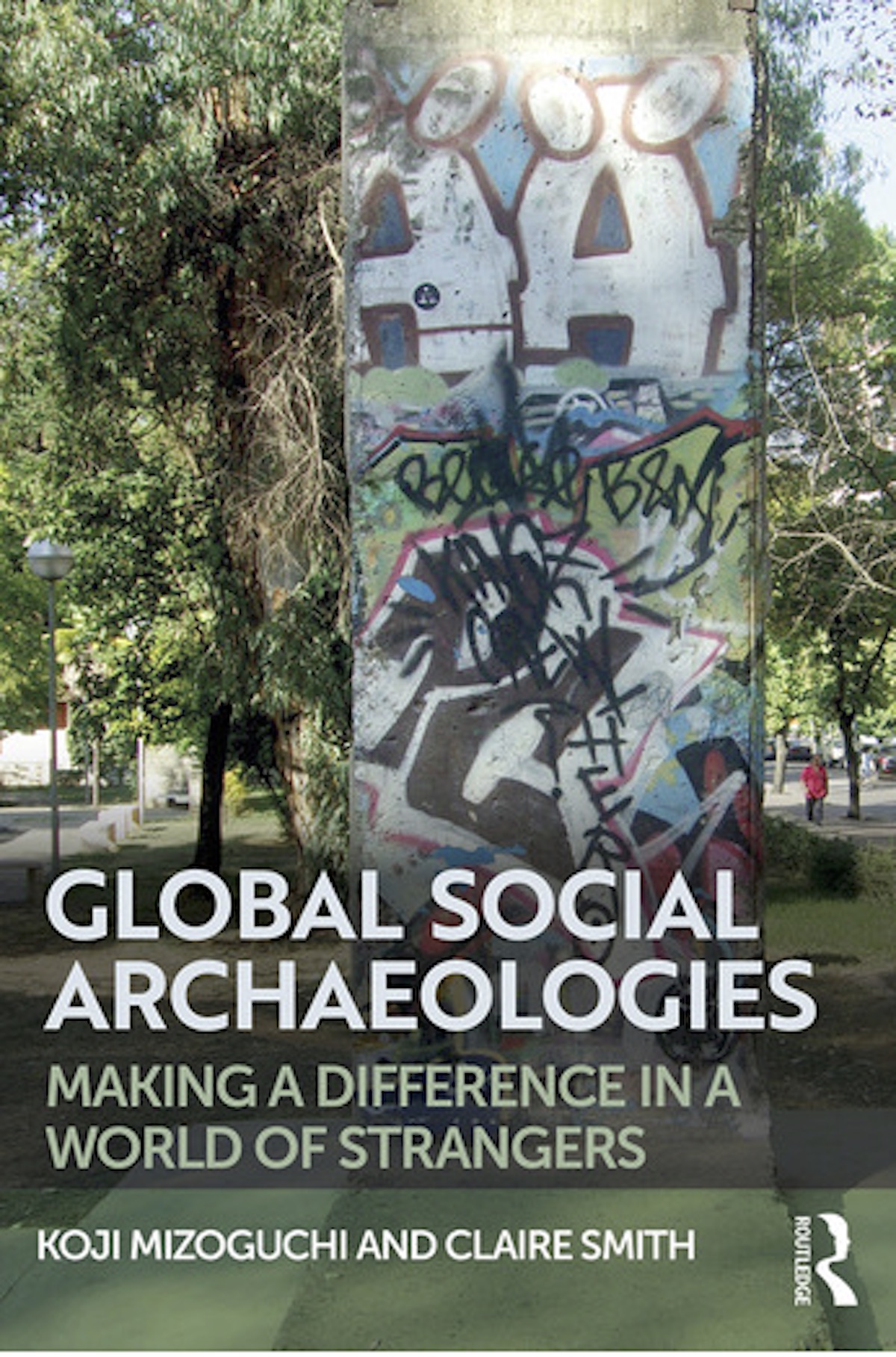
Once freed from the Spanish Crown, Mexico’s intellectuals used the past to build the nation and to create her identity. Using the past to construct national identities was a common strategy for the liberated colonies. Scholars around the world have stimulated insightful discussions to analyse this strategy, as the rapport has far-reaching implications for contemporary societies. Despite that scholars in neighbouring countries are revisiting the implications of this relationship for their own societies, very few scholars have engaged in similar discussions in Mexico. Essentially, the relationship has governed archaeological practice in Mexico, including heritage management and public policy to combat poverty, with profound social and economic implications for Mexico’s contemporary societies, as discussed in this excerpt.
Download
López Varela, Sandra L. 2018 Cultural Heritage and the Digital Divide. In Copy Culture. Sharing in the Age of digital Reproduction, edited by Brendan Cormier, Victoria and Albert Museum
While museums and cultural organizations focus their efforts on sharing digitized heritage online, a glaring gap emerges: over half of the world still has no access to the Internet. Furthermore, youth around the world are using the Internet in ways which are fundamentally incompatible with the design of many collections-based websites. Sandra López Varela argues that if the heritage community wants to take global access seriously, they will need to adapt to the changing landscape of how the Internet is being used, and by whom.
Download
López Varela, Sandra L. 2017 The Heritage Business Industry: Mexico’s Opportunity for Economic growth. In Negocios en México/Business in Mexico, edited by Guido Rings and Antonio M. Ciruela Lorenzo, i-Mex Revista
The following discussion addresses the potential of developing a heritage business industry in Mexico for the purposes of economic growth. The discussion challenges Mexico’s reliance on tourism as a revenue stream in the context of high rates of violence and criminal activity, and examines its failure to promote its rich culture and history. Here, an alternative scenario is offered to create value from Mexico’s rich culture and history by introducing cultural resource management (CRM), an industry developed by private firms around the world, for the protection and management of cultural heritage in compliance with environmental and historical laws. In a context of international initiatives, mainly by the World Bank and the Inter- American Development Bank, this contribution identifies those key factors pressuring the Mexican government to introduce CRM in Mexico as well as alternative routes for financing heritage preservation. Mexico’s dependency on international institutions for economic growth will eventually introduce a definition of heritage beyond notions of old and pretty objects. If Mexico wants to bring significant revenue to its economy, the Mexican government is compelled to embrace a heritage definition involving the significance of place.
Download
López Varela, Sandra L. 2015 Hacia una epistemología de la identidad mexicana: implicaciones para el crecimiento económico y el manejo del patrimonio cultural, Reflexiones Marginales, UNAM
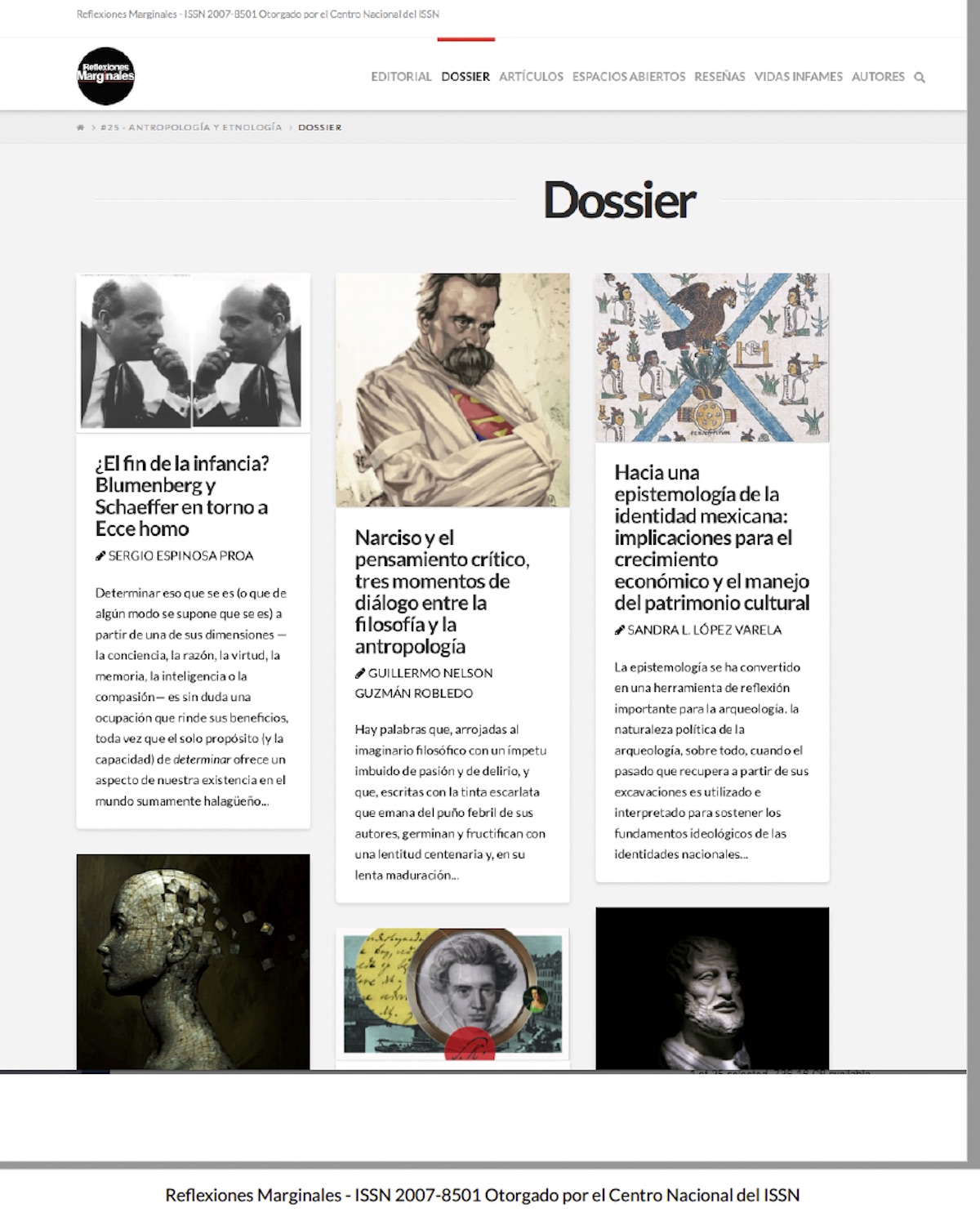
Given the resurgence of nationalist sentiments around the world, archaeologists have opened a discussion about the consequences of constructing and legitimizing collective identities based on the material record, an epistemological approach, practically, absent in Mexico since the 1980s. Archaeology has the potential to write a history that can do “good” or bring harm to indigenous communities. That is why it is necessary to promote an epistemological analysis in Mexico around the implications of legitimizing collective identities for modern populations based on archaeological remains. Consequently, this is the central theme of these pages, which reveals the political character of Mexican archeology in the construction of the nation and the profound economic and social consequences, not only for the practice of this discipline, but for those populations labeled as indigenous.
Download
López Varela, Sandra L. 2015 La experiencia del espacio histórico a partir de la World Wide Web: los ideales institucionales frente a la memoria social. In World Wide Web y la formación de la subjetividad, edited by Alberto Constante and Ramón Chaverry Soto, Afinita Editorial
In asking ourselves how the World Wide Web influences human subjectivity in our ways of life, including our behavior, the pages of this chapter will highlight how its construction is guided by the ideals and values of those institutions and governments that promote Information Technology. Information and Communication (ICT) controls the contents of the World Wide Web, including our knowledge about the past.
Download
López Varela, Sandra L. 2015 Academic categorization of population identities: implications for appropriation of the indigenous condition. In Le Soi et le Cosmos: d'Alexander von Humboldt jusqu'aujourd'hui, edited by Soraya Nour Sckell and Damien Ehrhardt, Duncker & Humblot
The pages that follow address the modes for appropriation of the indigenous identity and resulting effects of this fostering discourse by the academia. In certain countries, demonstrating a link to past populations makes all the difference to a land claim, the right of access to an archaeological site, or the deposition of human remains at a museum against reburial. For Mexico, the implications of assigning an indigenous nature to a given population by the academia takes on 1) political importance, as it shapes the definition of the nation; 2) economic relevance, as it defines development policies to alleviate poverty and promote welfare; and 3) social significance, as this divide-and-rule policy, restricts unity within diversity.
Download
López Varela, Sandra L. 2014 Mexico’s Heritage. In Encyclopedia of Global Archaeology, edited by Claire Smith, Springer
“Did you know? Mexico has more World Heritage sites than any other country in the Americas” is a frequent statement over the Internet, reinstating the commitment of the National Institute of Anthropology and History (Instituto Nacional de Antropologı´a e Historia [INAH]) to protect cultural resources for future generations. In dreaming a culturally conscious nation, with awaiting resources to be accepted by UNESCO, the quest has had its positive effects, but it too has constrained the meaning of heritage, leaving the remaining of Mexico’s patrimony in a defenseless state against the undergoing economic growth, envisioned in the National Development Plans.
Download
López Varela, Sandra L. 2014 Teaching Heritage Business and Marketing: a Solution for Heritage Preservation. Advances in Archaeological Practice: a Journal of the Society for American Archaeology.
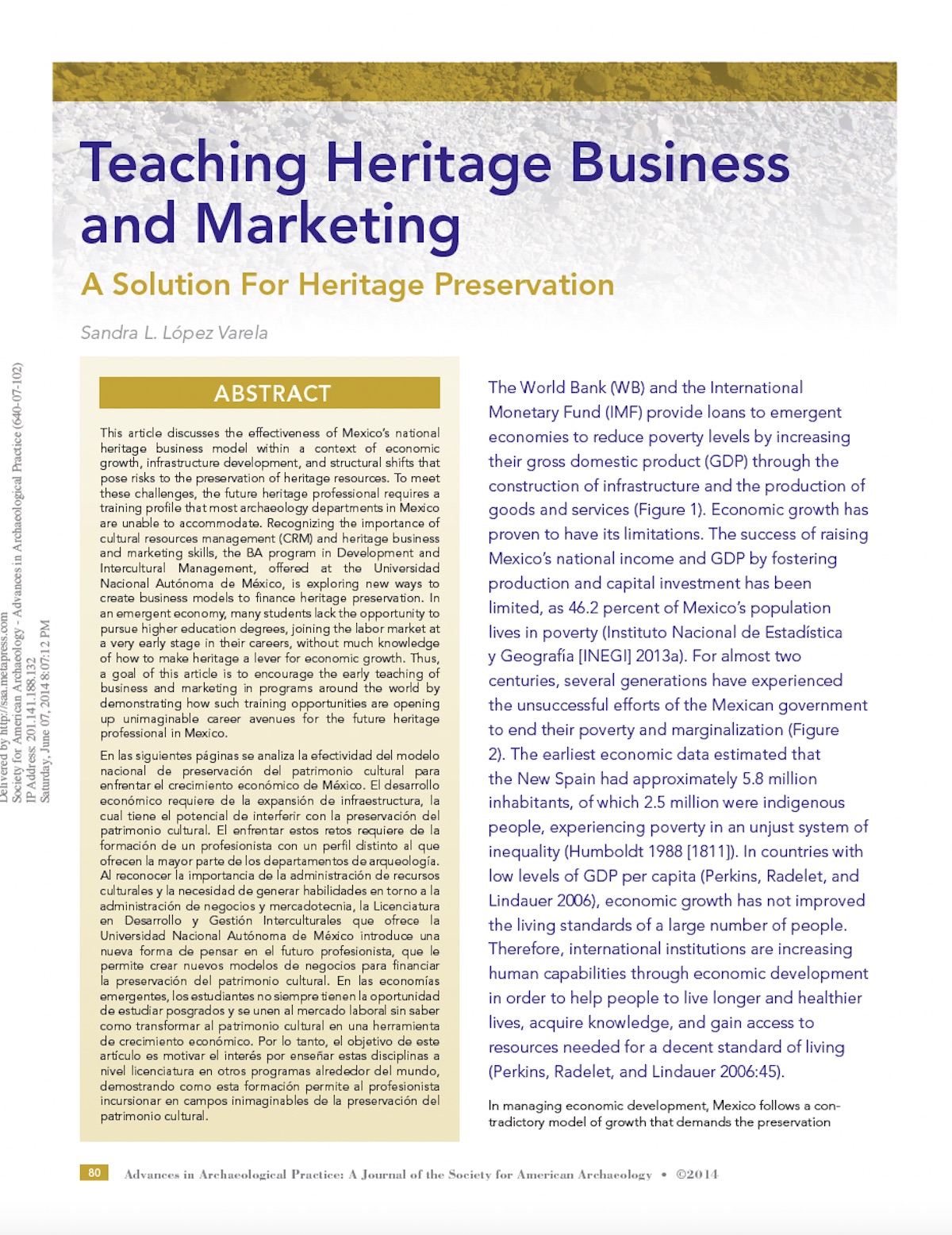
This article discusses the effectiveness of Mexico’s national heritage business model within a context of economic growth, infrastructure development, and structural shifts that pose risks to the preservation of heritage resources. To meet these challenges, the future heritage professional requires a training profile that most archaeology departments in Mexico are unable to accommodate. Recognizing the importance of cultural resources management (CRM) and heritage business and marketing skills, the BA program in Development and Intercultural Management, offered at the Universidad Nacional Autónoma de México, is exploring new ways to create business models to finance heritage preservation. In an emergent economy, many students lack the opportunity to pursue higher education degrees, joining the labor market at a very early stage in their careers, without much knowledge of how to make heritage a lever for economic growth. Thus, a goal of this article is to encourage the early teaching of business and marketing in programs around the world by demonstrating how such training opportunities are opening up unimaginable career avenues for the future heritage professional in Mexico.
Download
López Varela, Sandra L. 2014 Sustainable heritage in Mexico: archaeological solutions for infrastructure planning and building. Open Journal of Archaeometry, PagePress
Mexico is a country that requires the construction and expansion of infrastructure to increase the competitiveness of its economy. Building this highly competitive logistic platform has had an impact on Mexico’s cultural and social heritage. In the State of Morelos, the municipalities of Cuernavaca and Jiutepec considered that sustainable development could be integrated with heritage preservation at the time of land use plans’ designing and adoption. Hereby described, a geographic information system-based predictive model, differentiating areas by their potential for different types of resources, is suggested as a solution to protect Mexico’s heritage within a uniform permitting and compliance process.
Download